
Student engagement is difficult to observe directly, and even harder to compare across classrooms at scale. Running more than 200 parallel, cohort-based live classes under a shared instructional rubric offers an unusual opportunity to study this problem: the same lesson content is delivered by different teachers, using different engagement strategies, to different student populations, with structured interaction data captured for every session. This post summarizes an observational analysis of that data, focused on one specific question: which classroom strategies are associated with broad, sustained student participation, and which only appear to work?
Why relatability is a reasonable but unproven strategy

Teachers commonly use a range of strategies to build engagement, including two-way dialogue, self-deprecating humor, genuine check-ins, and relatability — for example, referencing current social media trends, viral memes, or niche pop-culture touchpoints such as K-pop. Relatability is a plausible mechanism: a sense of shared reference points is often assumed to build the belonging that makes voluntary participation more likely. But relatability strategies also carry a risk that is easy to overlook in the moment — a classroom can *sound* highly engaged while only a narrow slice of students is actually participating, with the volume driven by a subset of students who share the specific reference being made.
Measuring participation systematically
Online live classes generate several channels of interaction data — chat messages, video feed activity, microphone use, and screen touches. For this analysis, the primary measure of participation was response to formative assessment polls, since polling participation aligns most directly with lesson objectives and, unlike offline paper quizzes collected at the end of a session, can be observed in real time and compared consistently across cohorts. Common reasons for poll non-response included fear of giving a wrong answer, general disengagement, and a misconception among some students that poll responses were graded or shared with parents.
Cohort-level poll participation varied substantially before a standardized process was introduced. By the second half of the 2024–2025 academic year, participation had been brought to a consistent baseline: every cohort exceeded 85% assessment-poll participation, regardless of student skill level or background. With that floor established, a qualitative comparative analysis was conducted across the performance spectrum, focused specifically on cohorts that combined high poll participation with a healthy, bell-curve distribution of assessment results — intended as a proxy for participation that reflected a genuine mix of student ability rather than participation concentrated among already-strong students.
Early-session activity appears to set the trajectory
Across cohorts, participation during a class’s opening minutes — warm-ups and diagnostic activities — was strongly associated with participation later in the session, including during formative assessment. This pattern is consistent with the general idea that an early opportunity to participate low-stakes shapes a student’s willingness to participate when material becomes more difficult, though the analysis does not establish this as a causal mechanism.
Digital classroom data made a further distinction visible that would be difficult to observe in person: some warm-up activities produced high volume — loud chat activity, audible excitement — while closer analysis showed that fewer than 20% of the class was meaningfully involved, with the remainder effectively passive observers. Sessions that opened this way tended to show a corresponding drop in participation once the class moved into formative assessment. Pop-culture or trend-based relatability activities were disproportionately represented among this pattern: they generated strong engagement from students already familiar with the reference, but appeared to leave unfamiliar students disengaged rather than drawn in. Given that the student population spans large metropolitan areas, regional cities, and smaller island communities with differing exposure to any given trend, this gap plausibly widens further at national scale, though the current analysis does not test that directly.
Characteristics associated with broader participation
Activities associated with higher, more evenly distributed participation shared three characteristics:
1. Low floor to entry
A format that allows every student to act at once (e.g., collective on-screen input, synchronized chat responses, brief binary-choice prompts), rather than one requiring students to wait for an individual turn.
2. Simple, intuitive instructions
Lowering the barrier to entry so everyone acts simultaneously. Whether it’s collective screen coloring, typing answers in a synchronized chat drop, or solving quick “This or That” prompts, no student is left waiting for a turn.
3. Simultaneous participation
All students act at the same time, which appears to lower the social risk of participating in an unfamiliar group.
Why belonging may be the underlying mechanism

These characteristics are consistent with belonging as a precondition for participation and risk-taking in a classroom setting. The underlying idea is intuitive outside education too: most people are more willing to speak up, try something new, or risk being wrong in a room where they already feel they fit in — a work meeting, a new gym class, a first day at a job — than in one where they still feel like an outsider. Classrooms are no different. Students arrive with very different past experiences, and those experiences shape how safe it feels to put themselves forward in front of a group of people they don’t yet know well. Early activities that reduce initial anxiety and give students a stake in the room appear to matter disproportionately for what follows — a pattern supported by a substantial body of literature in educational psychology (Aguilar, Walton, & Wieman, 2014).
With this framing, “inclusive” warm-ups were defined operationally as activities in which more than 80% of a class participates meaningfully. The working hypothesis behind this threshold is that when a larger share of students can engage successfully in a low-stakes opening activity, they spend less energy worrying about inadequacy or standing out, leaving more capacity to take the kind of risks — attempting an unfamiliar problem, answering aloud, being wrong in front of peers — that learning tends to require. A related, testable prediction is that broader early engagement also reduces off-task distraction, freeing attentional resources for new material (Schwartz, Tsang, & Blair, 2016).
An applied output, and its limits as evidence
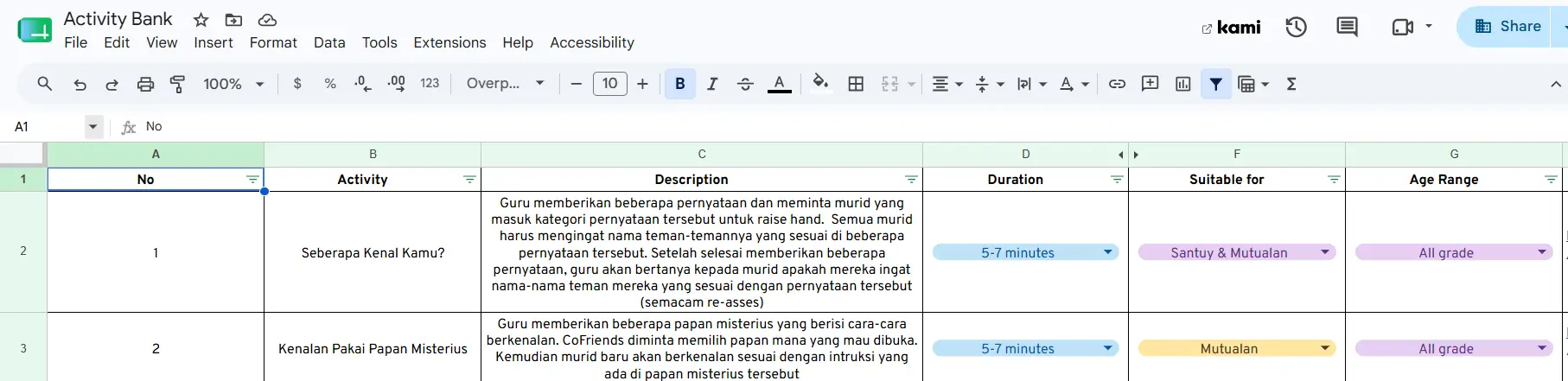
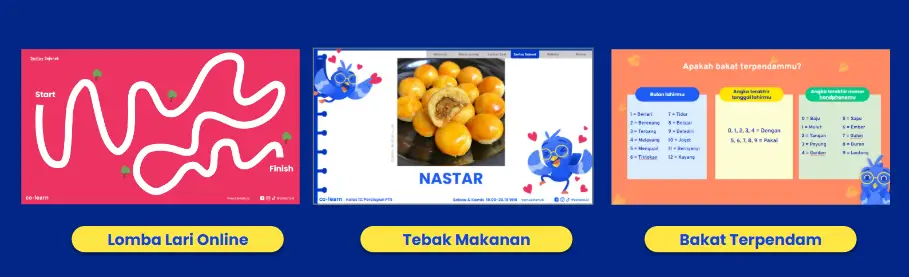
These observations were used to build an internal library of more than 80 activities, filterable by duration (3–7 minutes), format, and age range, intended to give teachers a curated set of options with a track record of broad participation rather than relying on ad hoc trend selection.
It’s worth being explicit about what this analysis can and cannot support. The comparison is drawn from operational classroom data, not a controlled experiment: cohorts were not randomly assigned to activity types, teachers self-selected which strategies to use, and student populations differ across cohorts in ways that were not controlled for. The association between early low-floor participation and sustained engagement, and between pop-culture-based activities and narrower participation, is therefore correlational.
References
Aguilar, L., Walton, G., & Wieman, C. (2014). Psychological insights for improved physics teaching. Physics Today, 67(5), 43.
Schwartz, D. L., Tsang, J. M., & Blair, K. P. (2016). The ABCs of how we learn: 26 scientifically proven approaches, how they work, and when to use them. W. W. Norton & Company.